Medically reviewed by Dr. Rajesh Harripersad, LPC-S, LCDC — U.S. Army Retired; EMDR Certified Behavioral Healthcare Provider. Regional Director, Virtue Recovery and Ambience Recovery Center.
Is Residential Treatment at Ambience Right for Your Anxiety? An Honest Triage
Most treatment websites answer this question with 'yes, call now.' We'd rather answer it truthfully, because the right level of care is the treatment — and because you'll trust everything else on this page more if we start here.
Where anxiety gets treated best — honestly
| Your situation | The right care | Why |
|---|---|---|
| Anxiety tangled with alcohol, benzodiazepines, cannabis, or other substance use | Ambience — this is exactly what we do | Integrated dual-diagnosis treatment addresses both conditions in one plan; treating either alone reliably fails |
| Severe anxiety that has outrun weekly therapy — panic ruling the calendar, life contracting | Ambience, or a residential mental health program | Residential structure, daily therapy, and medication management can reset what an hour a week can't |
| Active crisis — suicidal thoughts, psychosis, immediate danger | 988 or an acute psychiatric hospital | Crisis stabilization is a psychiatric-hospital job; call or text 988 now, then treatment after |
| Mild-to-moderate anxiety, no substance involvement | A good outpatient therapist (CBT) | Weekly cognitive behavioral therapy is the evidence-based first-line answer — and we'll tell you so on the phone |
The Anxiety–Substance Cycle: Why the 'Solution' Keeps the Problem Alive
Anxiety and substances form the tightest self-medication loop in behavioral health, and it runs on real neurochemistry. Alcohol — like benzodiazepines — boosts GABA, the brain's braking system, and quiets glutamate, its accelerator. Relief is genuine, immediate, and brief. As the drink wears off, the brain rebounds: GABA down-regulated, glutamate surging — which is why the morning after drinking, anxiety comes back louder than it left. Researchers found the effect strong enough to earn its own name — 'hangxiety' — and found it hits anxious people hardest, exactly the people drinking for relief.
So the cycle tightens: anxiety → drink or pill → brief relief → rebound anxiety worse than baseline → earlier, larger dose. Run it long enough and you have two conditions — an anxiety disorder and a substance dependence — each convincing you the other is the problem. Among people seeking treatment for alcohol dependence, a third have a diagnosable anxiety disorder. This page — and this facility — exists for exactly that third.
When Anxiety Needs More Than Weekly Therapy
Outpatient CBT is the right first move for most anxiety. These are the signs it has been outrun:
- Panic attacks or dread now organize the calendar — what you do, where you go, what you cancel
- A substance has become load-bearing: the drink before the meeting, the pill before sleep, the smoke before people
- Therapy insights evaporate against the physiology — you know better and it doesn't help
- Work, relationships, or health are visibly eroding
- You've cut back the substance and the anxiety spike sent you straight back
- Sleep is broken more nights than not, and everything is worse for it
How Residential Anxiety Treatment Works at Ambience
Residential care changes the variables weekly therapy can't touch: environment, structure, and dosage of treatment. Days are built around evidence-based therapy — cognitive behavioral therapy is the core, the best-evidenced treatment for anxiety disorders — delivered individually and in groups, daily rather than weekly, alongside the skills work that retrains an alarmed nervous system: exposure practice, sleep restoration, stress physiology.
Where substances are part of the picture — and here, they usually are — treatment is fully integrated: medically supervised detox when alcohol or benzodiazepines require a safe taper (never a cold stop), dual-diagnosis therapy that treats the anxiety and the dependence as the single system they've become, and medication management handled honestly. On that last point, the benzodiazepine question deserves its own answer.
The Benzodiazepine Paradox, Answered Straight
The hardest question in anxiety medicine: the medications that quiet anxiety fastest — Xanax, Ativan, Klonopin — are the ones that create dependence within weeks, rebound anxiety between doses, and a withdrawal that can be dangerous. For many people who arrive here, a benzodiazepine prescribed for anxiety has become a second condition wearing the first one's clothes.
Our answer: anxiety is highly treatable without benzodiazepines. CBT outperforms sedatives over time; non-addictive medications (like SSRIs) treat the condition rather than muting the moment; and where a benzodiazepine dependence already exists, a medically supervised taper runs alongside — not before — real anxiety treatment, so you're never left facing the original problem empty-handed. Our benzodiazepine, Xanax, and alcohol guides cover the medication side in depth.
Anxiety Treatment in Central Texas
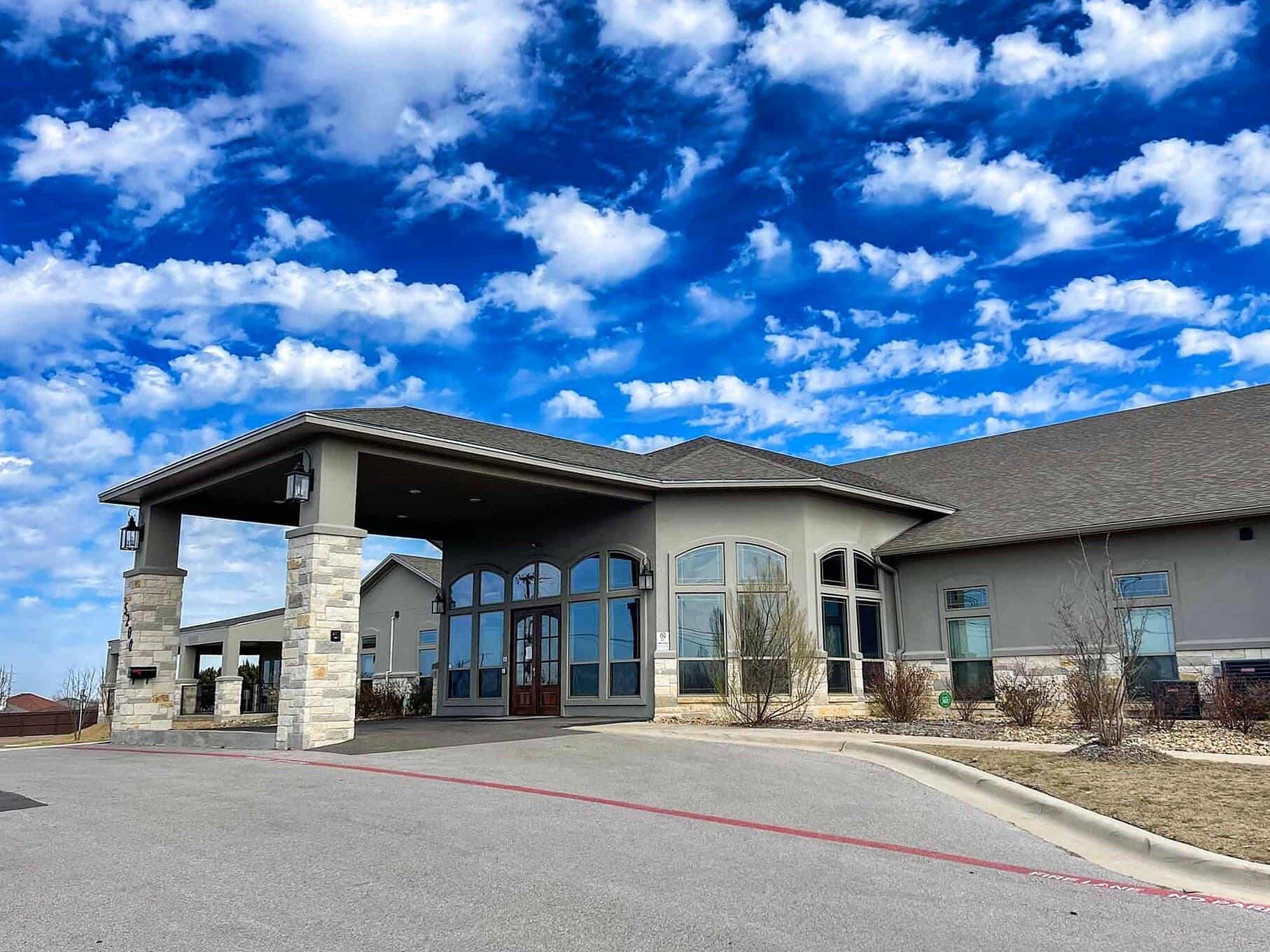
Ambience Recovery Center treats adults across Central Texas — Killeen, Harker Heights, Temple, Belton, Copperas Cove, Waco, and the Austin corridor, including the Fort Cavazos military community, where hypervigilance is often the residue of service and 'managing it' has a long tradition of running through a bottle.
One confidential call gets you the honest version of the triage table above, applied to your actual situation — including when the right answer is a referral elsewhere. Insurance verification is free, TRICARE questions welcome. If anxiety and the thing you use to survive it have become one problem, this is where both get treated.
Sources & Medical References
- NIMH — Any Anxiety Disorder: Statistics
- Grant BF, et al. Prevalence and co-occurrence of substance use disorders and independent mood and anxiety disorders (NESARC). Arch Gen Psychiatry, 2004
- NIDA — Common Comorbidities with Substance Use Disorders Research Report
- Marsh B, et al. Shyness, alcohol use disorders and 'hangxiety'. Personality and Individual Differences, 2019
- Smith JP, Randall CL. Anxiety and Alcohol Use Disorders. Alcohol Research, 2012
- 988 Suicide & Crisis Lifeline