Medically reviewed by Dr. Rajesh Harripersad, LPC-S, LCDC — U.S. Army Retired; EMDR Certified Behavioral Healthcare Provider. Regional Director, Virtue Recovery and Ambience Recovery Center.
The Hospital Drug That Follows You Home
Ativan (lorazepam) is medicine's utility benzodiazepine. It stops active seizures, calms panic in emergency rooms, steadies patients before procedures, and anchors the standard protocols for managing alcohol withdrawal. If you've been through a hospital stay, a health scare, or a crisis, there's a fair chance lorazepam was part of it — and a fair chance the prescription came home with you.
That's the paradox at the heart of Ativan dependence: the drug that treats one withdrawal can quietly create another. Its own FDA label is unusually candid — effectiveness in long-term use beyond four months 'has not been assessed,' and everyday stress 'usually does not require treatment with an anxiolytic.' Yet refills stretch four months into four years, one crisis at a time.
If that's your story — or your parent's — nothing about it is unusual, and nothing about it is hopeless. Lorazepam dependence is one of the most common and most treatable situations in benzodiazepine medicine.
What Makes Ativan Different From Other Benzos
Lorazepam has a genuinely distinctive pharmacology. Unlike most benzodiazepines, it produces no active metabolites — its breakdown product has no effect on the brain — and it's cleared by a pathway that doesn't depend heavily on the liver's main enzyme system. That's why physicians prefer it for older adults and people with liver disease, and it's a real safety advantage.
But the same profile has a sharp edge. With a half-life around 12 hours and nothing active left behind, blood levels rise and fall in a sawtooth pattern — and a nervous system adapted to lorazepam feels every trough. The result is interdose withdrawal: anxiety, restlessness, or dread that reliably surfaces hours before the next scheduled dose and melts away minutes after taking it. Many people read that as proof their anxiety is severe. Often, it's the dependence talking on a 12-hour clock.
Signs Ativan Use Has Become Dependence — or Addiction
The markers, especially for a medication that usually starts legitimately:
- Anxiety that tracks the dosing schedule — building before each dose, easing right after
- The original dose stopped working, and it's been increased
- A hospital or crisis prescription that has quietly become permanent
- Real fear around refills, travel, or any gap in supply
- Using Ativan for ordinary stress, sleep, or situations it wasn't prescribed for
- Memory lapses, daytime grogginess, unsteadiness, or a fall — especially in older adults
- Mixing with alcohol or opioids, even occasionally — a breathing-suppression risk the FDA boxes in its sternest warning
Ativan Withdrawal: The Fastest Onset of the Major Benzos
Because lorazepam clears in about 12 hours with no active metabolites to cushion the fall, withdrawal begins fast — typically within 8 to 24 hours of the last dose. That speed catches people who miss a dose or decide to 'just stop': by the next morning, rebound anxiety, insomnia, tremor, and agitation are already climbing.
And the stakes are the same as for every benzodiazepine: the FDA's boxed warning states plainly that abrupt discontinuation can produce withdrawal reactions including seizures, which can be life-threatening. Never stop lorazepam cold — the safe route is a gradual, medically supervised taper, and it works.
Ativan withdrawal after abrupt discontinuation
Lorazepam's short half-life makes this the fastest-starting withdrawal of the major benzodiazepines. A managed taper is designed to prevent this curve entirely.
8–24 hours
Onset
Rebound anxiety, restlessness, and insomnia begin as blood levels fall — often by the first missed morning.
Days 1–4
Escalation
Tremor, sweating, agitation, and sensory sensitivity climb. Unmanaged, this window carries seizure risk.
Days 4–10
Peak
Symptoms crest — panic, poor sleep, difficulty concentrating — then begin easing.
Weeks 2–4
Stabilization
The nervous system steadies week over week as acute symptoms recede.
Months (some people)
Protracted symptoms
A minority experience lingering anxiety, insomnia, or sensory symptoms — treated through ongoing care, not endured alone.
A Special Word About Older Adults
Ativan's liver-friendly profile makes it the benzodiazepine most often prescribed to older adults — and that's precisely the population benzodiazepines put most at risk. The American Geriatrics Society's Beers Criteria flags benzodiazepines as potentially inappropriate for adults 65 and older because they raise the risk of falls, fractures, confusion, and cognitive impairment.
If you're reading this about a parent — the nightly lorazepam that started after a hospitalization, the growing fog, the fall that scared everyone — know that getting an older adult safely off a benzodiazepine is delicate, slow, and absolutely achievable with medical supervision. It is never 'too late' or 'not worth it.' Cognitive clarity and steadiness routinely improve off the drug.
How We Treat Ativan Dependence at Ambience
The path off lorazepam is a gradual, medically managed taper — often bridged through a longer-acting benzodiazepine so the 12-hour sawtooth becomes a smooth descent — inside medically supervised detox with 24/7 monitoring. From there, care steps into the level that fits: residential treatment, PHP day treatment, or intensive outpatient.
Running alongside the taper, from day one: real treatment for whatever Ativan was managing. Cognitive behavioral therapy for anxiety and panic, non-addictive medications where appropriate, sleep restoration, and dual-diagnosis care for depression or trauma underneath. The goal isn't just 'off the drug' — it's needing it less than you ever did.
Ativan Treatment in Central Texas
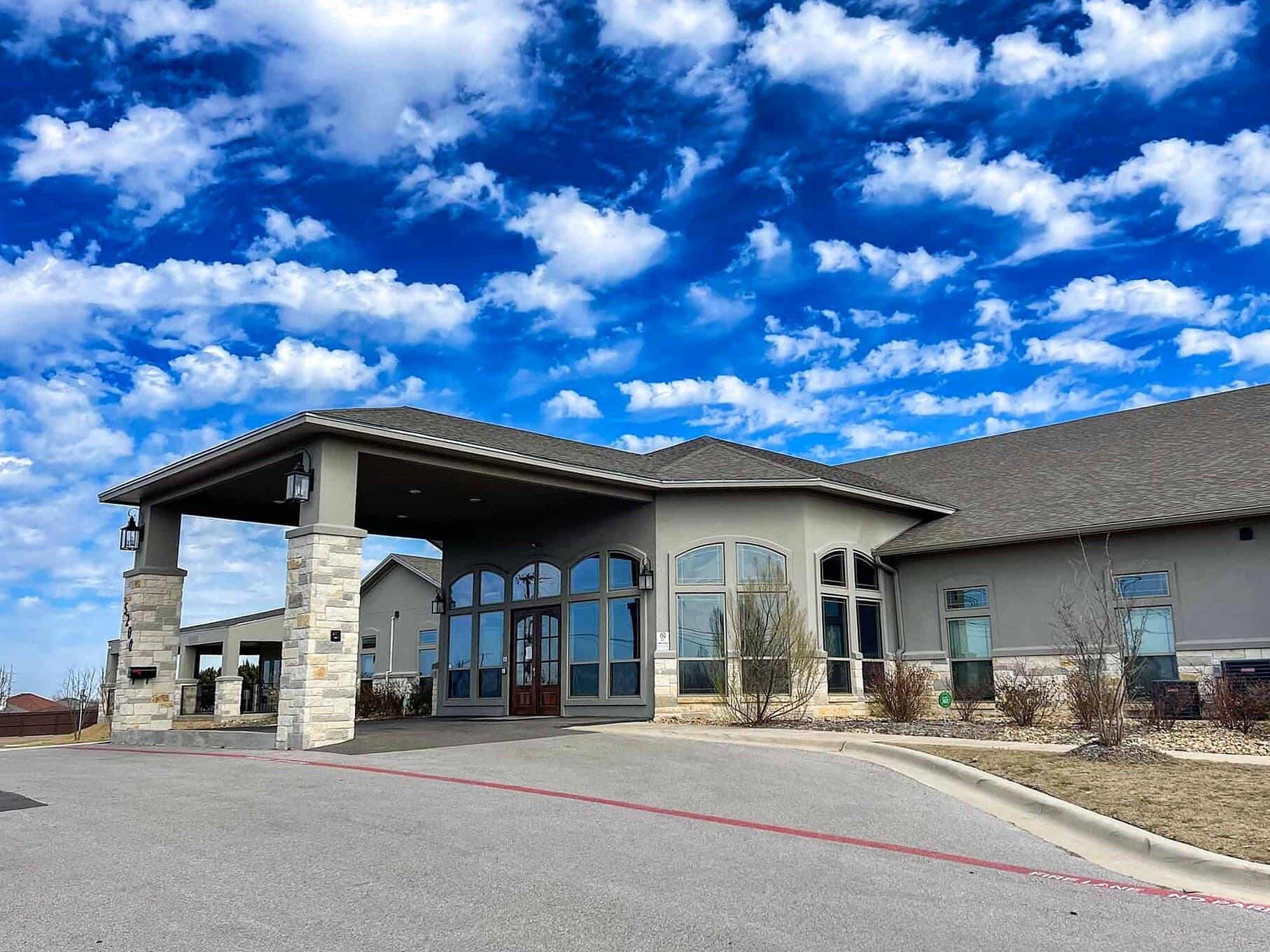
Ambience Recovery Center provides medically supervised lorazepam tapers, detox, and full-continuum treatment for adults across Central Texas — Killeen, Harker Heights, Temple, Belton, Copperas Cove, Waco, and the Austin metro, including the Fort Cavazos military community and the families around it.
Whether the prescription started in an ER, after a deployment, or at a bedside years ago, the way off is the same: gradual, monitored, and paired with treatment that actually addresses the anxiety. One confidential call gets you an honest assessment and free insurance verification — including TRICARE questions — before you decide anything.
Sources & Medical References
- FDA — Ativan (lorazepam) tablets prescribing information
- FDA Drug Safety Communication — Boxed warning update for the benzodiazepine class (Sept 2020)
- ClinCalc DrugStats — Lorazepam (MEPS/AHRQ, 2023)
- NCBI LiverTox — Lorazepam
- American Geriatrics Society — Beers Criteria (benzodiazepines in adults 65+)
- ASAM Clinical Practice Guideline on Alcohol Withdrawal Management (2020) — benzodiazepine protocols
- StatPearls — Sedative, Hypnotic, or Anxiolytic Use Disorder (NCBI Bookshelf)